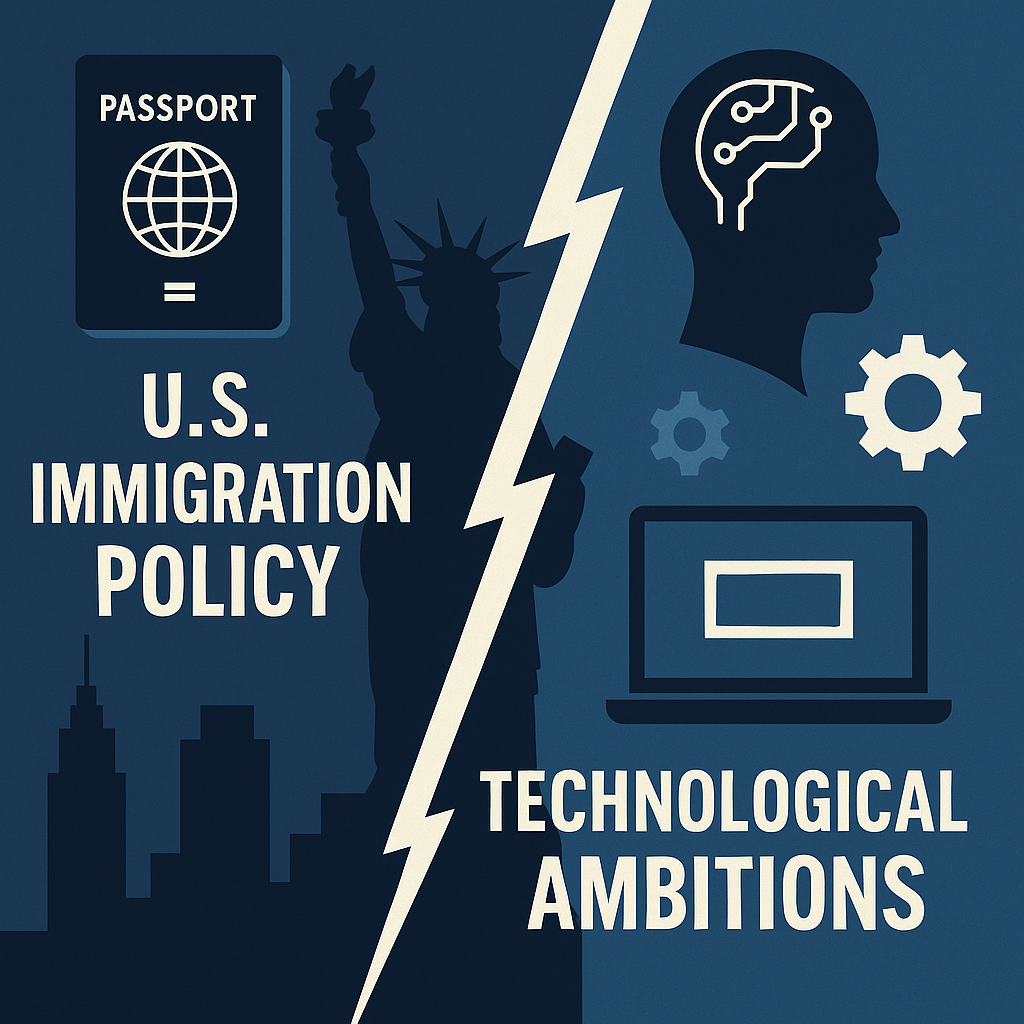
The United States has long been a magnet for the world’s brightest minds. From scientists and engineers to entrepreneurs and academics, high-skilled immigrants have played a pivotal role in driving innovation, creating jobs, and shaping industries that define the global economy. Yet, in recent years, the U.S. has faced increasing competition from countries like Canada, Australia, and Germany, which have implemented policies specifically designed to attract and retain top-tier talent. As the global race for talent intensifies, the U.S. must confront a critical question: Are its current immigration policies enough to maintain its competitive edge?
High-skilled immigrants are not just contributors to the economy; they are often its primary drivers. Many of the most transformative companies in the U.S.—including Google, Tesla, and Moderna—were founded or co-founded by immigrants. These individuals bring unique perspectives, expertise, and entrepreneurial spirit that fuel innovation. However, restrictive immigration policies and prolonged green card backlogs are increasingly discouraging high-skilled professionals from choosing the U.S. as their destination. The resulting brain drain—a phenomenon where talented individuals seek opportunities elsewhere—poses a significant threat to America’s economic future.
Countries like Canada and Australia have recognized the value of high-skilled immigration and have developed streamlined pathways to permanent residency. For example, Canada’s Express Entry system ranks applicants based on factors like education, work experience, and language proficiency, ensuring that the most qualified individuals are fast-tracked. Similarly, Australia’s General Skilled Migration program prioritizes applicants with skills in high-demand industries. These systems offer not only efficiency but also stability, providing immigrants with a clear path to long-term residency and citizenship. In contrast, the U.S. system, with its reliance on temporary work visas like the H-1B and its restrictive caps on employment-based green cards, often leaves high-skilled immigrants in limbo for years.
The impact of these policies extends beyond individual immigrants. Industries that rely heavily on high-skilled workers, such as technology, healthcare, and advanced manufacturing, face significant challenges in filling critical roles. For instance, the U.S. is currently grappling with a shortage of STEM professionals, which could hinder its ability to remain a leader in emerging fields like artificial intelligence, quantum computing, and renewable energy. By failing to attract and retain top talent, the U.S. risks ceding its leadership position to countries that are more proactive in welcoming high-skilled immigrants.
To address this issue, the U.S. must take decisive action to modernize its immigration policies. First, the annual caps on employment-based green cards should be raised or eliminated, particularly for high-demand categories like EB-1 and EB-2. This would reduce the lengthy backlogs that currently deter many skilled professionals from staying in the U.S. Second, the introduction of a points-based system, similar to those in Canada and Australia, could help prioritize applicants with the skills and qualifications most needed by the U.S. economy. Third, offering more flexible visa options for entrepreneurs and startup founders would encourage innovation and job creation within the U.S.
Additionally, the U.S. must recognize the importance of creating a welcoming and supportive environment for immigrants. Beyond policy reforms, efforts should be made to reduce the uncertainty and stress that often accompany the immigration process. Providing clear timelines, improving transparency in decision-making, and enhancing customer service at agencies like USCIS are all steps that could make the U.S. a more attractive destination for global talent.
The brain drain dilemma is not merely a policy issue; it is a question of vision and leadership. The U.S. has the resources, institutions, and opportunities to remain the global leader in innovation and economic growth. However, achieving this requires a commitment to embracing high-skilled immigration as a cornerstone of its strategy. By competing aggressively for the world’s best and brightest, the U.S. can secure its place as a destination where talent thrives, industries flourish, and the future is shaped.
*Nothing in this blog is intended to be construed as legal advice nor establish an attorney-client relationship. Please schedule a consultation to discuss your case.